When It Rains Look for Rainbows: A Designer's Review
As someone who spends hours staring at screens digitizing patterns and then even more time hunched over embroidery machines, I have developed a keen eye for what makes a machine embroidery design actually work in the real world. We see thousands of files pass through our digital inboxes, but only a fraction survive the transition from a pretty pixel image to a stitched finished product. Recently, I took a close look at "When It Rains Look for Rainbows," an inspirational quote SVG Cut File designed by Caty Catherine. While this asset lives primarily in the Crafts and Graphics categories as a digital download, my interest lies in its potential application for physical goods. Can this typography hold up under the needle? Let's break it down from a practitioner's perspective.
First Impressions and Visual Personality
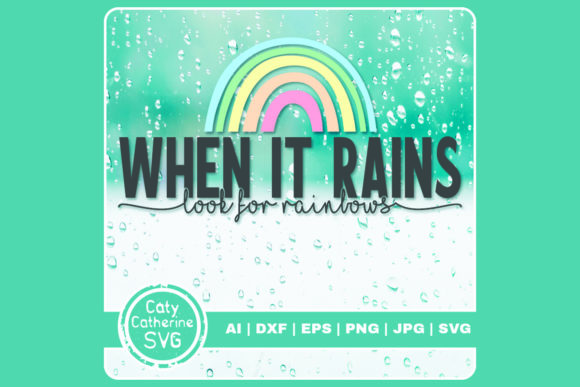
The moment you open the file, the mood is immediately clear. This isn't a shouting headline; it is a gentle reminder. The layout of "When It Rains Look for Rainbows" suggests a flow that mimics the arc of a rainbow itself, likely utilizing a mix of script and sans-serif fonts to create visual rhythm. For an embroidery project, this balance is crucial. If the text is too uniform, it becomes boring on fabric. If it is too chaotic, it becomes unreadable once stitched. The design appears to have a friendly, approachable personality that fits perfectly with current trends in boutique branding and handmade home decor.
From a design assets standpoint, receiving the package in SVG, Transparent PNG, EPS, and DXF formats is a solid start. As a reviewer, I appreciate the DXF specifically because it allows me to import the vector paths directly into my digitizing software if I need to tweak node points or adjust spacing before generating stitch data. The transparent PNG is invaluable for creating quick printable mockups to show clients how the design might look on a navy blue sweatshirt versus a cream-colored tote without committing thread yet.
Real-World Application Scenarios
To truly evaluate this design, I imagined a specific scenario: a custom order for a local boutique expecting a run of nursery decor items. The client wanted something uplifting for a baby shower gift set. "When It Rains Look for Rainbows" feels tailor-made for this. Imagine this quote embroidered on a soft muslin swaddle blanket or a structured canvas tote bag design for a new mom. The sentiment aligns perfectly with the hopefulness of a new beginning.
Beyond baby items, I can see this thriving as sweatshirt embroidery for the cooler months. There is a growing market for "comfort wear" that features positive affirmations. If you are an Etsy seller or run a small shop product line, this design could be the centerpiece of a fall collection. It works well on textured fabrics like French terry or fleece, provided the stitch density is managed correctly. The phrase also lends itself beautifully to kitchen textiles. A linen tea towel or a cotton apron featuring this quote adds a touch of warmth to a utilitarian object, transforming it into a conversation piece.
For those interested in commercial embroidery, the versatility here is key. Whether you are making patches for a school club, personalized gifts for a wedding party, or holiday embroidery for seasonal sales, the universal message ensures broad appeal. It avoids being overly niche, which helps in moving inventory faster.
Technical Considerations for Stitching
Here is where we move from aesthetics to engineering. Just because a file looks good on screen does not mean it will stitch out cleanly. When adapting "When It Rains Look for Rainbows" from a graphic to an embroidery file, several factors come into play.
First, consider the stitch density. Inspirational quotes often rely on fine lines and elegant curves. If the original graphic has very thin strokes, attempting to fill them with a standard satin stitch might result in puckering or thread breaks, especially on stretchy fabrics. You may need to convert certain elements to a running stitch or a narrow column stitch to maintain clarity. Conversely, if the letters are thick, a fill stitch might be appropriate, but you must watch out for excessive bulk that could make the back of the garment uncomfortable against the skin.
Hoop size is another critical constraint. Depending on the aspect ratio of the text arrangement, you might need a rectangular hoop rather than a standard square one. Always measure the design dimensions against your machine's capabilities before promising a client a specific placement, such as on a cap cuff or a small pocket.
Fabric texture plays a massive role in how this design performs. On a smooth, tight-weave cotton, the details will pop. However, on a fluffy towel or a coarse canvas, small details can get lost. If you are working with dark fabric, you must ensure your thread colors provide enough contrast. A pastel rainbow effect might vanish on a black hoodie unless you use a high-sheen polyester thread or add a white underlay to make the colors vibrate.
Navigating Tricky Surfaces and Materials
Not every surface is created equal. If you plan to apply this to a curved surface like a baseball cap, be wary of the text distortion. The arc of the cap can make straight lines look bent. You might need to digitally pre-distort the design in your software to compensate. Similarly, layered garments like hoodies require careful attention to stabilizer. A heavy cut-away stabilizer is often necessary to prevent the fabric from sagging under the weight of the text over time, especially if the design covers a wide area.
Small hoop sizes present another challenge. If you are trying to fit this onto a child's onesie for baby embroidery, you may need to scale the design down significantly. At smaller sizes, intricate corners and tiny lettering can become a muddy mess of thread. In these cases, simplifying the design or removing the smallest decorative elements might be necessary to preserve readability.
Enhancing Brand Value and Customer Trust
Ultimately, the quality of your execution determines the perceived value of the item. A crisp, clean stitch-out of "When It Rains Look for Rainbows" signals professionalism. It tells the customer that you care about the details. Sloppy stitching, on the other hand, can undermine even the most beautiful message. For craft business owners, consistency is king. If you sell this as part of a series, ensure your tension, thread choice, and finishing techniques remain consistent across all units.
This design also offers excellent opportunities for brand consistency. If you have a shop that focuses on mental health awareness or positive living, this quote reinforces your brand identity. It becomes more than just a product; it becomes a statement that resonates with your audience, fostering buyer engagement and loyalty.
Practical Notes for the Studio
Before you commit to a full production run, heed these practical steps:
- Test on scrap fabric first: Never stitch a final product without a trial run on the exact same material and weight.
- Check thread color contrast: View your test stitch-out under different lighting conditions to ensure readability.
- Review stitch density: Ensure the design isn't too dense for the fabric, which causes puckering.
- Confirm hoop size: Verify the design fits your available hoops without needing excessive re-hooping.
- Inspect small details: Zoom in on the stitched sample to check for thread breaks or missed stitches in tight corners.
- Test in black and white: Sometimes seeing the design in monochrome helps identify structural issues before adding color complexity.
- Use proper stabilizer: Match your stabilizer type (cut-away, tear-away, water-soluble) to the fabric stretch and weight.
- Verify licensing: Since this is a digital product by Caty Catherine, always confirm the license terms regarding commercial use before selling finished items.
In conclusion, "When It Rains Look for Rainbows" is a versatile and emotionally resonant design that holds significant potential for thoughtful handmade products. With careful digitizing adjustments and attention to material selection, it can elevate a simple piece of fabric into a cherished keepsake. Whether you are a hobbyist making a gift or a professional decorator fulfilling orders, this design rewards those who take the time to prepare properly.