Hello, I'm Antisocial: A Designer's Review
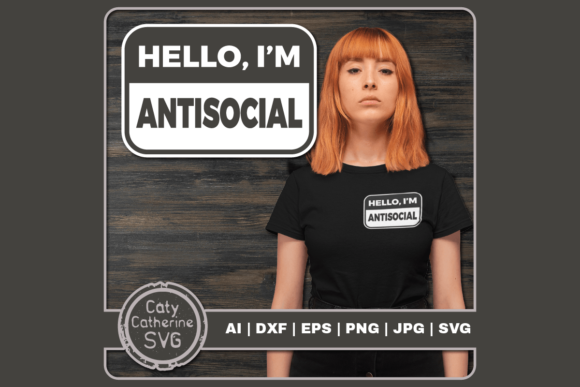
As someone who spends more time staring at stitch charts than socializing at parties, the Hello, I m Antisocial Funny Name Badge immediately caught my eye. It is not just a graphic; it is a statement piece that resonates deeply with a specific demographic of crafters and end-users. When evaluating a new digital embroidery file for real-world application, I look beyond the preview image. I need to know how this design behaves under the needle, how it translates to different fabric textures, and whether it holds up as a viable product for an Etsy seller or boutique owner. This review breaks down the practical viability of this design from the perspective of a professional decorator.
First Impressions and Visual Personality
The initial appeal of the Hello, I m Antisocial Funny Name Badge lies in its ironic humor. The layout mimics a standard conference or event name tag, a universal symbol of forced interaction, but subverts it with a blunt declaration of solitude. Visually, the design relies on clean lines and bold typography. For an embroidery project, this is generally a good sign. Complex, wispy fonts often turn into thread blobs, but a badge-style graphic usually allows for crisp satin stitch borders and solid fill stitch areas that render well on home machines.
The mood is playful yet relatable. It fits perfectly into the current trend of "introvert chic" apparel. When I visualize this stitched out, I see it working best on casual wear where the message can be delivered with a wink. It is not a design for formal wear or subtle branding; it is a conversation starter designed to end conversations, which is a unique selling point for any handmade product.
Real-World Application Scenarios
To truly test the worth of a design, I imagine it on actual products. Let's consider a custom tote bag design. A canvas tote is sturdy enough to handle the density of a badge graphic. If I were producing these for a craft fair, the Hello, I m Antisocial Funny Name Badge would be a top seller for students or freelancers who carry their laptops everywhere. The contrast of white thread on a natural or black canvas bag would make the text pop, ensuring readability from a distance.
Another strong contender is sweatshirt embroidery. Hoodies and crewnecks are the uniform of the antisocial crowd. Applying this design to the left chest area creates a personalized feel, almost like a uniform for a club no one wants to join. However, one must be cautious with the stitch density here. Sweatshirt fleece is thick, but if the design has too many overlapping layers, it can cause puckering or make the garment stiff. A lighter touch with the fill stitches would ensure the fabric remains drapey and comfortable.
I also see potential in creating an embroidered patch. By stitching this design onto twill or felt and cutting it out, you create a versatile accessory that customers can iron onto jackets or backpacks. This expands the utility of the Graphics file beyond direct-to-garment stitching, offering a low-risk way for small shop owners to test the market without committing to embroidering entire garments.
Technical Considerations for Stitching
While the concept is solid, the execution depends entirely on how the file is digitized. Since the source material lists formats like SVG, PNG, EPS, DXF, and JPG, it is crucial to distinguish between cut files and embroidery files. If you are using this as a machine embroidery design, you must ensure you have the correct embroidery-specific format (like PES, DST, or XXX) compatible with your machine. If the package only contains vector graphics, you will need to digitize it yourself or purchase a pre-digitized version to avoid poor stitch quality.
Assuming you have a proper embroidery file, pay close attention to the lettering. Small text in embroidery can easily become illegible if the stitches are too wide or if the fabric has a loose weave. Before running a production batch, always test the design on scrap fabric that matches your final product. Check the thread colors; high contrast is key here. Black text on a white badge background is classic, but consider using navy or charcoal for a softer look on light garments.
Fabric choice matters immensely. Avoid using this on highly textured fabrics like heavy bouclé or very stretchy knits without adequate stabilization. The sharp corners of the "badge" rectangle require precise stopping and starting points. On a curved surface like a cap, this design might distort unless you use a strong backing stabilizer and perhaps adjust the pull compensation in your digitizing software. For flat items like tea towels or pillow covers, the risk of distortion is lower, making them safer bets for beginners.
Careful Placement and Sizing
Size is another critical factor. The "name badge" aesthetic works best when it is recognizable but not overwhelming. If you scale it down too small for a baby onesie, the text "Antisocial" might merge into a single blob of thread. Conversely, blowing it up too large for a pocket square could look comical in the wrong way. Always verify the recommended hoop size before purchasing or stitching. If the design requires a large hoop that your machine does not support, you may need to split the design or find an alternative placement.
Furthermore, consider the washability. Items like aprons and kitchen towels undergo frequent laundering. Ensure that the satin stitch borders are dense enough to prevent fraying after multiple washes. A poorly secured edge on a badge design can peel up quickly, ruining the finished product and damaging your reputation as a maker.
Commercial Viability and Brand Value
For commercial embroidery professionals and creative entrepreneurs, the Hello, I m Antisocial Funny Name Badge offers strong market potential. Humor sells, especially when it validates the customer's feelings. This design appeals to a broad audience, from teenagers to adults who work from home. It adds value to a plain garment, transforming a generic sweatshirt into a personalized gift with personality.
However, professionalism is key. Even though the message is funny, the stitching must be flawless. Sloppy threads or misaligned layers undermine the joke and make the product look cheap. Consistency in your craft business output builds trust. If a customer buys this expecting a crisp, clean badge and receives a messy stitch-out, they are unlikely to return. Use this design to showcase your technical skill, proving that even simple concepts require expert execution.
Before listing this as a small shop product or including it in a bundle of design assets, double-check the licensing terms provided by the designer, Caty Catherine. Some files are for personal use only, while others allow for unlimited commercial sales of finished physical items. Never assume; always read the fine print to protect your business from legal issues.
Final Verdict for Makers
The Hello, I m Antisocial Funny Name Badge is a charming, versatile design that fits well within the modern landscape of Crafts and custom apparel. Its strength lies in its simplicity and relatability. When executed with the right materials, proper stabilization, and attention to detail, it becomes a standout item in any portfolio. Whether you are making holiday gifts, stocking an online store, or just adding some personality to your own wardrobe, this design delivers. Just remember to respect the technical limits of your machine and fabric, and let the humor shine through clean, professional stitching.