Coffee Hating Your Job Done Enthusiasm: A Designer's Review
As a designer who spends more time staring at stitch simulations than I do sleeping, I am always on the lookout for graphics that translate well from a screen to actual thread. When I first encountered the Coffee Hating Your Job Done Enthusiasm design by Caty Catherine, my initial reaction was a mix of amusement and immediate practical calculation. We have all seen the "I hate my job" meme culture saturate social media, but turning that sentiment into a viable handmade product requires a specific kind of visual personality. This isn't just a funny quote; it is a statement piece for the modern workforce, and evaluating it as a potential machine embroidery design requires looking past the humor into the technical reality of stitching it out.
The Visual Personality and Layout Assessment
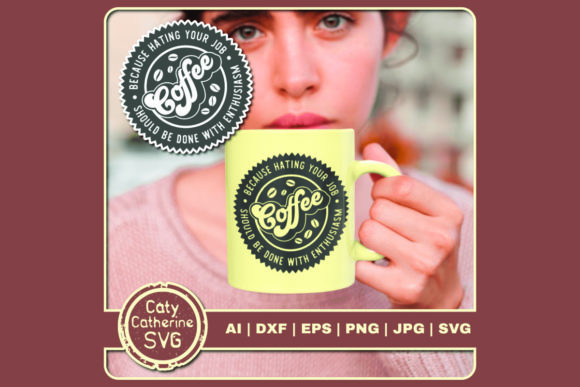
The first thing that strikes me about this graphic is its typographic balance. In the world of Graphics and digital assets, text-heavy designs can often be a nightmare for digitizers and embroiderers alike. If the letters are too close, they bridge; if they are too far apart, the message gets lost. This particular layout feels intentional. The phrase "Coffee Because Hating Your Job Should Be Done With Enthusiasm" is long, which immediately raises flags about hoop size and placement. However, the arrangement suggests a stacked or curved composition that fits naturally within standard embroidery hoops.
The mood here is sarcastic yet professional enough for a boutique setting. It creates an instant connection with anyone who has ever needed a caffeine fix to survive a Monday morning meeting. For an Etsy seller or craft business owner, this emotional resonance is gold. It transforms a simple custom apparel item into a relatable conversation starter. The visual weight of the words suggests that this design would rely heavily on clean fill stitch work for the body of the letters, potentially accented with satin stitch borders to make the text pop against darker fabrics.
Real-World Application: The Tote Bag Scenario
To truly test the viability of this design, I imagined a specific real-life scenario: creating a limited run of canvas tote bags for a local co-working space or a freelance creative's holiday gift drop. Canvas is a forgiving fabric, offering a stable base for the stitch density required by a text-heavy graphic. Placing Coffee Hating Your Job Done Enthusiasm on a natural or black canvas tote creates a high-contrast look that is both trendy and functional.
In this context, the design shines as a tote bag design because the flat surface allows the lettering to remain legible without distortion. Unlike stretchy knits, where registration can shift, the tote bag provides a rigid canvas for the embroidery file to perform as intended. I can picture a customer grabbing this bag at a craft fair, reading the quote, and immediately understanding the brand voice of the small shop product. It adds value not just through the labor of stitching, but through the cleverness of the message. It turns a utility item into a piece of wearable (or carry-able) art that says, "I work hard, but I'm cynical about it."
Sweatshirts and Custom Apparel Considerations
Moving beyond totes, the next logical step is sweatshirt embroidery. This is where the design faces its biggest technical hurdle. Sweatshirt fleece is thick, textured, and often uneven. Applying a long phrase like this to a chest or back panel requires careful attention to stabilizer choice. If you are planning to use this for holiday embroidery gifts or personalized gift batches, you must account for the fabric pile. A dense design on heavy fleece can cause puckering if the backing isn't robust enough.
For a finished product that looks professional, I would recommend testing this on a scrap piece of the exact garment weight you intend to sell. The thread colors chosen here are critical. A white or cream thread on a navy or charcoal sweatshirt offers classic contrast, but consider metallic gold or silver threads for a festive twist during the holidays. The key is ensuring the running stitch details in any decorative elements do not get swallowed by the fabric texture. If the design includes small icons like coffee cups, ensure they are large enough to stitch out clearly without becoming a blob of thread.
Technical Challenges and Fabric Limitations
While the concept is strong, there are areas where Coffee Hating Your Job Done Enthusiasm demands caution. The length of the sentence means it may not fit comfortably in a standard 4x4 inch hoop without reducing the font size to a point where legibility suffers. For caps or hats, this design is likely unsuitable unless it is significantly simplified or split across multiple lines with generous spacing. Curved surfaces distort text, and long sentences exacerbate this issue, making the ends of the phrase appear smaller or warped.
Furthermore, thin fabrics like lightweight t-shirts or baby clothes present a risk. The stitch density required to make the text opaque and readable might be too heavy for delicate materials, leading to stiffness or tearing. If you are considering this for baby embroidery, I would advise against it unless the design is scaled down significantly and stitched with a lighter fill. Similarly, dark fabrics require a solid underlay to prevent the background color from showing through the letters, which adds bulk. Always check the digital embroidery file settings for underlay options before committing to a production run.
Enhancing Brand Value and Customer Trust
From a business perspective, using a well-executed version of this design can significantly boost brand consistency and buyer engagement. Customers trust handmade items that look crisp and deliberate. A sloppy execution of a text-based design screams "amateur," but a clean, well-stitched version signals quality. This affects your printable mockup presentations as well. When listing this as a design asset or a finished good on Etsy, the clarity of the text in your photos will determine click-through rates.
The humor in the quote builds an emotional bridge. It tells the buyer that the maker understands their struggle. This shared experience increases the perceived value of the embroidered patch or garment. It is no longer just cloth and thread; it is an inside joke between the maker and the wearer. For commercial embroidery projects, this kind of relatability drives sales. However, remember that licensing is paramount. Since this is a graphic designed by Caty Catherine, you must verify the license terms regarding commercial use of the finished product. Some SVG files are for personal use only, while others allow for unlimited physical sales but prohibit reselling the digital file itself.
Final Verdict and Designer Notes
In conclusion, Coffee Hating Your Job Done Enthusiasm is a potent design for the right application. It fits perfectly within the Crafts category for makers who understand typography and fabric mechanics. My advice for anyone looking to utilize this design is to start with a test stitch on scrap fabric that matches your final product. Check the hoop size requirements carefully; you may need a 5x7 or larger hoop to maintain font readability. Experiment with thread color contrast to ensure the message pops, and never skip the stabilizer, especially on stretchy knits.
If you are an apparel decorator or creative entrepreneur, this design offers a fantastic opportunity to create niche products for office workers, teachers, and healthcare professionals who run on caffeine and sarcasm. Just ensure you respect the intellectual property of the original creator and adhere to the provided formats, such as the SVG File mentioned in the product details. With the right preparation and a keen eye for detail, this design can become a staple in your catalog of personalized products, delivering both laughs and high-quality craftsmanship to your customers.